Summer in Sydney and Brisbane can get sweltering, and a working air conditioner is essential to keep your home cool. But if your air conditioner’s outside unit is dirty, clogged with debris, or poorly maintained, it can drastically reduce your AC’s performance, increase electricity bills, and even damage your system.
In this guide, we’ll show Sydney and Brisbane homeowners exactly how to clean an air conditioner outside unit safely, why it’s necessary, and practical tips to ensure your AC runs efficiently all year round.
Why Cleaning Your AC Outside Unit Matters
Your air conditioner’s outside unit (condenser unit) is responsible for releasing heat from your home to the outdoors. Over time, it can accumulate:
- Dust and dirt
- Leaves and twigs
- Pollen and grass clippings
- Debris from storms or bushfire smoke
When these block the fins and coils, your AC has to work harder to cool your home, which leads to:
- Higher electricity bills
- Reduced cooling efficiency
- Shorter lifespan for your AC system
- Potential breakdowns
Sydney and Brisbane homeowners face extra challenges with humid weather and dust, making outdoor unit maintenance even more crucial. By keeping the outside unit clean, you not only boost performance but also save on energy bills and prolong the life of your air conditioner.
Signs Your AC Outside Unit Needs Cleaning
How do you know it’s time to clean your AC outside unit? Here are some common indicators:
- Reduced cooling efficiency – your home isn’t reaching the set temperature
- Strange noises – rattling or humming from debris in the unit
- High electricity bills – more energy is being used to achieve the same cooling
- Visible dirt, leaves, or debris on or around the unit
- Uneven cooling – some rooms are cool, others remain warm
If you notice any of these signs, it’s time to clean your AC condenser or call a professional.
Safety First — Precautions Before Cleaning
Cleaning your AC outside unit can be simple, but it’s essential to prioritise safety:
- Turn off power at the breaker – never clean while the unit is running
- Wear gloves and safety goggles – protects against sharp fins and debris
- Avoid harsh chemicals – use AC-safe coil cleaners
- Keep children and pets away – outdoor units can be hazardous during maintenance
- Call a professional if unsure – especially for large systems or damaged units
Safety ensures that you clean effectively without risking injury or damaging your AC.
Step-by-Step Guide to Clean Your AC Outside Unit
Follow these steps to clean your AC outdoor unit safely and efficiently:
1. Turn Off the AC and Disconnect Power
Before touching anything, switch off the AC at the thermostat and turn off the breaker. Safety is critical.
2. Remove Debris Around the Unit
Clear leaves, sticks, and other debris from around the condenser. Trim any plants at least 30cm away from the unit to ensure proper airflow.
3. Clean the Fins and Coils
Use a soft brush or fin comb to remove dust and dirt. Avoid bending the fins, as this reduces efficiency. For stubborn dirt, an AC-safe coil cleaner can be applied.
4. Hose Down the Condenser
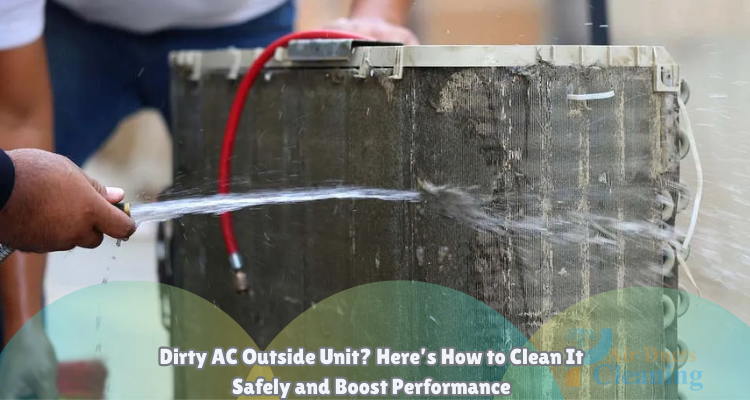
Gently spray low-pressure water from the top down to rinse dirt off. Avoid high-pressure water, which can damage the fins.
5. Straighten Bent Fins
If fins are bent, carefully straighten them using a fin comb. Straight fins ensure optimal airflow.
6. Check Drainage
Ensure the condensate drain is clear. A blocked drain can lead to water damage and affect cooling efficiency.
7. Reassemble and Test
Once cleaned, reconnect power, turn on the AC, and monitor performance. It should run quieter and more efficiently.
Tools and Supplies You’ll Need
To clean your AC outside unit properly, gather the following:
- Soft brush and fin comb
- Garden hose (low pressure)
- AC coil cleaner (safe for your system)
- Screwdriver (for access panels)
- Gloves and safety goggles
- Optional: vacuum for fine debris
Having the right tools makes the process safer and more effective.
Common Mistakes to Avoid
Even small mistakes can damage your AC or reduce cleaning effectiveness:
- Using high-pressure water — can bend fins or damage coils
- Harsh chemicals — can corrode metal components
- Ignoring fins and vents — reduces airflow
- Skipping regular maintenance — leads to long-term inefficiency
- Cleaning without power off — dangerous and risky
Avoiding these mistakes ensures your AC remains efficient and safe.
How Often Should You Clean Your Outdoor AC Unit?
For Sydney and Brisbane homeowners, it’s recommended to clean your AC outdoor unit:
- Twice a year – ideally at the start of summer and winter
- After storms or bushfire smoke – removes debris and dust
- When performance drops – if cooling efficiency decreases
Regular cleaning ensures energy efficiency, optimal cooling, and longer system lifespan.
DIY vs Professional Outdoor AC Cleaning
Some homeowners prefer DIY cleaning, while others opt for professionals. Here’s when to choose each:
DIY Cleaning
- Light debris removal
- Surface cleaning of fins and coils
- General maintenance between professional services
Professional Cleaning
- Annual maintenance
- Deep cleaning of condenser coils
- Handling clogged fins, corrosion, or refrigerant issues
- Ensures energy efficiency, safety, and warranty compliance
Additional Tips for Maintaining Your AC
- Keep at least 30cm clearance around the unit
- Clean indoor filters regularly to improve overall efficiency
- Check AC performance periodically and listen for unusual noises
- Schedule annual professional maintenance to avoid costly repairs
- Use eco-friendly cleaning products for safety and environmental benefits
Frequently Asked Questions About AC Outside Unit Cleaning
Q1: How do I safely clean my AC outside unit?
A: Turn off power, remove debris, clean fins and coils gently, and hose down with low pressure.
Q2: Can cleaning the outdoor unit improve AC performance?
A: Yes, it restores airflow, reduces electricity bills, and extends system life.
Q3: What tools do I need for AC condenser cleaning?
A: Soft brush, fin comb, garden hose, coil cleaner, gloves, and safety goggles.
Q4: How often should I clean my split system outdoor unit?
A: At least twice a year, and more often after storms, bushfire smoke, or heavy debris.
Q5: Can I damage my AC if I clean it myself?
A: Only if you use high-pressure water, harsh chemicals, or don’t turn off the power. Follow safety steps to avoid damage.
Conclusion
Cleaning your air conditioner outside unit is essential for Sydney and Brisbane homeowners. A clean unit:
- Boosts cooling performance
- Reduces electricity bills
- Improves indoor comfort and air quality
- Extends the lifespan of your AC
Whether you DIY or hire a professional, regular cleaning ensures your AC works efficiently during Australia’s hot summers. Follow our step-by-step guide and maintain your AC for cool, comfortable, and energy-efficient homes.