Let’s be honest. Most of us don’t think about our chimney until something goes wrong. Maybe smoke starts filling the lounge room on a cold Sunday night. Maybe there’s a weird smell coming from the fireplace in the middle of summer. Or maybe you just realised you can’t remember the last time anyone looked inside that flue.
If you’ve found yourself asking “how often to clean chimney” systems in your home, you’re not alone. It’s one of the most common questions Australian homeowners search for, and getting the answer right matters more than most people realise.
A dirty chimney isn’t just an inconvenience. It’s a genuine fire hazard, a health risk, and it makes your heater work harder while giving you less warmth.
This guide gives you the definitive answer on chimney cleaning frequency, tailored to how you use your fireplace, what you burn, and where you live in Australia – with a particular focus on Brisbane and Sydney homeowners.
Why Does Chimney Cleaning Frequency Actually Matter?
Every time you light a fire, your chimney collects byproducts. That includes:
- Soot – the fine, powdery black stuff
- Ash and debris – bits that don’t fully combust
- Creosote – a sticky, tar‑like substance that coats the inside of your flue
Creosote is the big one. It’s highly flammable. When enough of it builds up inside your chimney, it can ignite and cause a chimney fire. These fires can burn intensely inside the flue and spread to your roof timbers, ceiling, or walls.
Beyond the fire risk, a dirty chimney also:
- Restricts airflow, making your fire harder to start and keep going
- Pushes smoke back into your room instead of up and out
- Reduces the heating efficiency of your wood heater or fireplace
- Can create carbon monoxide risks, especially with gas appliances
That’s why understanding how often to clean chimney systems isn’t a trivial question. It’s about safety, efficiency, and protecting your home.
The Quick Answer to How Often Your Chimney Needs Cleaning
If you use your chimney regularly during winter, the general rule is:
Clean your chimney at least once a year.
For most Australian homeowners in Brisbane, Sydney, and similar climates, an annual chimney sweep timed for late summer or autumn (February to May) is the gold standard.
But the real answer depends on three key factors:
- How often you use your fireplace or wood heater
- What type of fuel you burn
- What kind of system you have
Let’s break each one down.
Chimney Cleaning Frequency Based on How Often You Use Your Fireplace
Not every household uses their fireplace the same way. Your usage pattern is the single biggest factor in deciding how often you need a chimney sweep.
1. Heavy Use – Your Main Winter Heat Source
If your wood heater or fireplace runs most days through winter, you’re putting serious demand on your chimney. That means soot and creosote accumulate quickly.
Recommended cleaning frequency:
- At least once a year, every autumn before winter starts
- If you burn wood daily for four or more months, consider a mid‑season inspection every couple of years to check buildup levels
This applies to many homes in western Sydney, the Blue Mountains, Hills District, and outer Brisbane suburbs where wood heaters are a primary heat source.
2. Moderate Use – Evenings and Weekends
If you light your fire a few times a week – typically on cold evenings and weekends – you’re still generating meaningful buildup, just at a slower rate.
Recommended cleaning frequency:
- Once every one to two years
- Have an annual visual inspection even in years you skip the full clean
- If you notice any performance changes (more smoke, weaker fires), bring the clean forward
3. Occasional or Decorative Use
Some homeowners only light a fire a handful of times each winter. Maybe it’s for a special dinner, a rainy weekend, or when guests come over.
Recommended cleaning frequency:
- Once every two to three years
- But don’t skip annual inspections for blockages, nests, or debris – a chimney that sits unused is a magnet for birds and possums, especially in leafy suburbs around Brisbane and Sydney
Even if your chimney barely sees action, a blockage from a bird’s nest or fallen debris can make it dangerous the moment you do light a fire.
How Fuel Type Changes Your Cleaning Schedule
What you put in the firebox has a direct impact on how quickly creosote and soot build up inside your flue. This is something a lot of homeowners don’t think about, but it genuinely changes how often you should clean your chimney.
Seasoned Hardwood
This is the best fuel you can burn. Properly dried hardwoods like ironbark, spotted gum, red gum, and jarrah burn hotter and produce less smoke. That means:
- Slower creosote buildup
- More efficient fires
- Longer gaps between necessary cleans (though annual is still best practice for regular users)
For the cleanest burn, your wood should be split and air‑dried for at least twelve months before use. Store it off the ground, covered on top, with open sides for airflow.
Softwood
Softwoods like pine are cheaper and easier to source, but they burn at lower temperatures and produce significantly more smoke and tar. That translates directly into faster creosote accumulation inside your flue.
If you regularly burn softwood, you should be cleaning your chimney at least once a year, even with moderate use.
Unseasoned or Green Wood
This is wood that hasn’t been properly dried. It has high moisture content, which means:
- It smoulders instead of burning cleanly
- Produces heavy, dirty smoke
- Creates aggressive creosote deposits very quickly
Burning green wood regularly is one of the fastest ways to coat your flue with dangerous buildup. If this sounds like your situation, an annual clean is non‑negotiable, and you should seriously consider switching to properly seasoned hardwood.
What You Should Never Burn
This is worth stating clearly. Never burn:
- Painted or treated timber
- Plywood, chipboard, or MDF
- Plastic, rubbish, or packaging
- Damp, mouldy, or rotting wood
These materials create toxic fumes, produce stubborn and corrosive deposits inside your flue, and can damage your chimney lining. They also make your home smell terrible.
Cleaning Frequency by System Type
The type of heating system in your home also affects how often to clean chimney components.
Open Fireplaces
These are common in older homes and character properties across Brisbane and Sydney. Open fireplaces have large masonry chimneys with plenty of internal surface area for soot to cling to.
They’re also more exposed to the elements, which means:
- Birds’ nests and debris are more common
- Moisture can enter and mix with soot deposits
- Large amounts of soot can accumulate even with moderate use
Cleaning recommendation:
- Inspect annually
- Clean every one to two years with regular winter use
- Clean every year if it’s your main heat source
Slow‑Combustion Wood Heaters
These are the most popular wood‑burning systems in Australian homes. You’ll find them everywhere from Penrith to Parramatta in Sydney and from Samford to Mount Gravatt in Brisbane.
They burn more efficiently than open fires but still produce creosote – especially if you run them on low burn settings overnight or burn lower‑quality wood.
Cleaning recommendation:
- Regular winter use → annual clean every autumn
- Moderate use → every one to two years, with yearly checks
Gas Log Fires and Flued Gas Heaters
Gas doesn’t produce creosote like wood, so many homeowners assume their gas fireplace flue never needs attention. That’s a dangerous assumption.
Gas flues can still:
- Become blocked by dust, spider webs, insects, or debris
- Develop corrosion or cracks at joins and connections
- Fail to vent properly, creating a carbon monoxide risk
Cleaning recommendation:
- Follow the manufacturer’s service schedule
- Have a licensed gasfitter or qualified technician inspect and service the flue every one to two years
- Time this before winter, just like wood systems
Specific Chimney Cleaning Considerations for Brisbane and Sydney Homeowners
1. How Often to Clean Chimney in Brisbane
Brisbane winters are mild compared to southern states, but plenty of homeowners still rely on wood heaters during June, July, and August. In areas like The Gap, Kenmore, Brookfield, Samford Valley, and suburbs around the Scenic Rim and D’Aguilar Range, wood heating is a genuine part of winter life.
Because Brisbane’s winters are shorter, some homeowners assume they can stretch cleaning intervals further. While that’s partly true for very light users, anyone running their heater multiple times a week should still aim for an annual chimney clean.
Brisbane’s humidity can also be a factor. Moisture interacts with soot and creosote deposits, making them stickier and harder to remove the longer you leave them.
Bottom line for Brisbane:
- Regular use → clean every year in autumn (March–May)
- Light use → every two to three years, with annual inspections for nests and blockages
2. How Often to Clean Chimney in Sydney
Sydney has a more pronounced cool season, and wood heaters are heavily used in suburbs like the Blue Mountains, Hornsby, Hills District, northern beaches, Sutherland Shire, and throughout western Sydney.
Many Sydney homes use slow‑combustion heaters as their primary winter heating, which means chimneys work hard for three to four months straight.
Bottom line for Sydney:
- Regular or heavy winter use → annual chimney cleaning, booked for March–May
- Moderate use → every one to two years
- Cold‑climate suburbs (Blue Mountains, upper north shore, outer west) → treat it like heavy use and clean every year
Warning Signs You Need a Chimney Clean Right Now
No matter where you fall on the cleaning schedule, certain signs mean you should stop waiting and book a chimney sweep immediately.
- Smoke coming back into the room – your flue is likely restricted or partially blocked
- Strong or unusual odours – tar‑like, musty, or smoky smells from the fireplace even when it’s not in use point to heavy soot and creosote deposits
- Black, shiny, or flaky deposits visible in the firebox – that shiny, glassy substance is creosote, and it’s a serious fire risk
- Fires that are hard to start or won’t burn properly – even with dry, seasoned wood, poor performance usually means restricted airflow in the flue
- Debris, nests, or animal activity – twigs falling into the firebox, scratching sounds, or birds around the chimney top all suggest a blockage
If you spot any of these, the question isn’t how often to clean chimney – it’s how quickly can you get a professional there.
What Happens If You Don’t Clean Your Chimney?
Putting off chimney cleaning might seem harmless, but the consequences can be serious:
- Chimney fires – creosote can ignite inside the flue, potentially spreading to your roof or ceiling
- Smoke damage – a blocked or restricted chimney pushes smoke, soot, and fine particles back into your living space
- Carbon monoxide exposure – particularly dangerous with gas appliances or poorly ventilated systems
- Reduced efficiency – your heater works harder and burns more wood to produce less heat
- Costly repairs – problems that a routine clean would have caught early can turn into expensive structural damage
- Insurance complications – if a fire is linked to poor maintenance, your claim could be questioned
Regular cleaning is one of the cheapest and simplest ways to avoid all of these problems.
DIY vs Professional Chimney Cleaning- What’s the Smart Choice?
You can buy chimney brush kits online, and for very light maintenance they have their place. But for a proper, thorough clean, a professional chimney sweep is the safer and smarter option.
A qualified sweep will:
- Use the correct brushes and rods for your specific flue
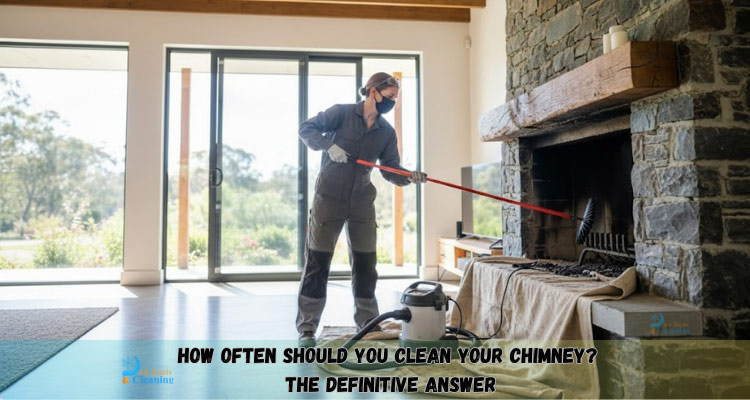
- Contain soot and debris with professional vacuums and drop sheets
- Identify early signs of damage, corrosion, cracks, or wear
- Remove stubborn glazed creosote that DIY brushes can’t handle
- Give you honest advice on your cleaning schedule and burning habits
For Brisbane and Sydney homeowners, a professional chimney clean typically takes 45 to 90 minutes and shouldn’t leave any mess in your home.
Frequently Asked Questions About Chimney Safety and Maintenance Frequency
1. Do I really need to clean my chimney every year?
If you use your wood heater or fireplace regularly each winter, yes. Annual cleaning is the safest approach. For occasional users, every two to three years may be enough, but you should still have an annual inspection for blockages and nests.
2. Does burning hardwood mean I can clean less often?
Seasoned hardwood does produce less creosote than softwood or green wood, which can slow buildup. But it doesn’t eliminate it. If you use your heater regularly, you should still plan for annual chimney cleaning regardless of wood type.
3. What’s the best time of year to clean a chimney in Australia?
The ideal window is late summer to mid‑autumn (February to May), before you start relying on your heater for winter warmth. This gives you time to fix any issues before the cold weather hits.
4. How do I know if my chimney is blocked?
Common signs include smoke coming back into the room, difficulty starting or maintaining a fire, unusual smells from the fireplace, and visible debris or nesting material in the firebox. If you notice any of these, book a professional chimney sweep as soon as possible.
5. Is it safe to use a chimney that hasn’t been cleaned in years?
No. A chimney that hasn’t been cleaned or inspected in several years could have significant creosote buildup, hidden blockages, or structural damage. Have it professionally inspected and cleaned before you light any fire.
The Bottom Line
So, how often to clean chimney systems in your home? Here’s the definitive answer:
- Regular winter use → clean once a year, every autumn
- Moderate use → clean every one to two years, with annual inspections
- Occasional use → clean every two to three years, but never skip inspections
- Burning softwood or green wood → clean at least once a year, no exceptions
- Noticed warning signs → clean immediately, regardless of schedule
For homeowners in Brisbane and Sydney, booking a professional chimney sweep between March and May each year is the simplest, smartest routine you can follow. It keeps your family safe, your heater running efficiently, and your home protected through every winter ahead.