
When you are looking for an air conditioning system in Brisbane and Sydney it is really important to pick the one. You want to be comfortable in your home; you want to save money on energy costs. You want the air inside your home to be clean.
In Brisbane the summers are really humid and in Sydney the weather can be over the place. So you need an air conditioning system that can handle all these weather conditions.
Lots of people try to decide between split system air conditioners and reverse cycle air conditioning systems. They do not really know what the difference is. Both of these systems are used a lot. They are made for different situations.
This guide will explain the difference between split system air conditioners, reverse cycle air conditioning systems and it will help you figure out which one is best for your home, in Brisbane or Sydney. It will tell you how well each system works in the weather, and it will help you make a good choice for your home.
Understanding Split System Air Conditioners
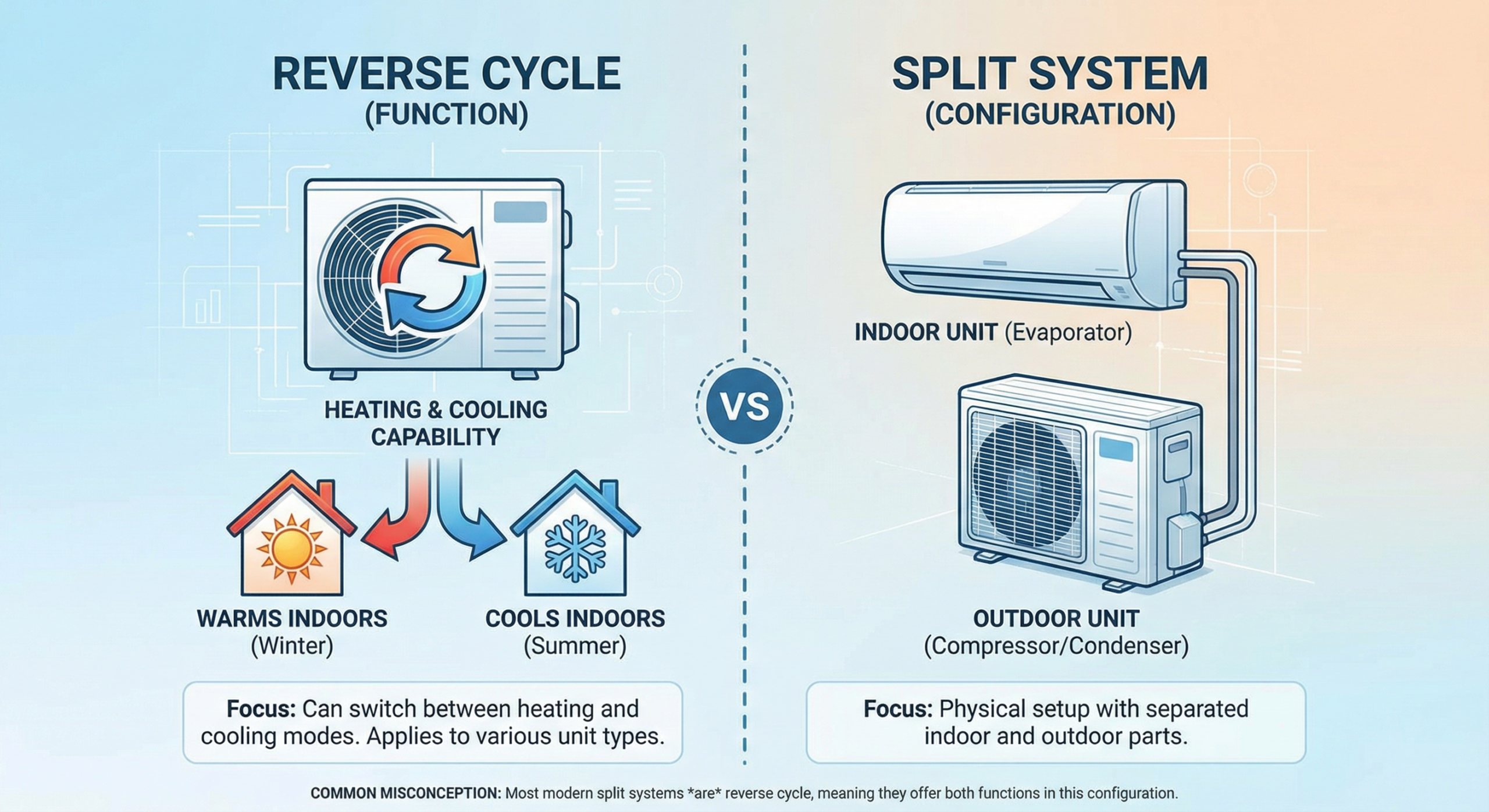
A split system air conditioner is designed to cool or heat a specific room or zone. It includes an indoor unit for air distribution and an outdoor unit for heat exchange.
1. Why Split Systems Work Well in Smaller Spaces
Split systems are commonly used in:
- Bedrooms
- Apartments
- Home offices
- Small living areas
They are effective when you only need to control the temperature in one part of the home, rather than the entire property.
2. Energy Efficiency for Targeted Cooling
Split systems are highly efficient when used in limited areas. Instead of cooling the entire house, you can focus on occupied rooms, reducing unnecessary energy consumption.
3. Cost-Effective Installation
Compared to larger systems, split systems are easier and cheaper to install. This makes them a popular choice for budget-conscious homeowners in Brisbane and Sydney.
4. Quick Cooling Performance
In hot and humid Brisbane conditions, split systems can provide fast and direct cooling, especially during summer nights.
Understanding Reverse Cycle Air Conditioners
A reverse cycle air conditioner is designed to provide both cooling and heating, making it suitable for year-round climate control.
1. Why Reverse Cycle Systems Are Popular
These systems are widely used in:
- Family homes
- Open-plan living areas
- Multi-room households
They are ideal when you need consistent temperature control across larger spaces.
2. Year-Round Climate Control
Reverse cycle systems can switch between heating and cooling modes, making them perfect for Sydney’s seasonal changes and cooler evenings.
3. Improved Energy Efficiency Over Time
Although the upfront cost is higher, reverse cycle systems can reduce the need for separate heaters and cooling devices, leading to long-term energy savings.
4. Better Temperature Consistency
Unlike single-room units, reverse cycle systems maintain stable indoor temperatures, improving comfort throughout the home.
Split System vs Reverse Cycle Air Conditioner Comparison Guide
| Feature | Split System | Reverse Cycle | Best for Brisbane & Sydney |
| Cooling | Excellent for one room | Excellent for large areas | Both effective in summer |
| Heating | Limited | Full heating | Reverse cycle better in winter |
| Energy Efficiency | High for small areas | High for full-home use | Depends on usage |
| Installation Cost | Lower | Higher | Split for budget setups |
| Coverage | Single room | Multiple rooms | Reverse for families |
| Humidity Control | Moderate | Strong | Important for Brisbane homes |
Key Differences Explained
Cooling and Heating Capabilities
- Split systems are mainly used for cooling, with limited heating options.
- Reverse cycle systems provide both heating and cooling, making them more versatile.
Performance in Local Climate
- Brisbane’s humidity requires strong cooling and moisture control.
- Sydney’s seasonal variation requires both heating and cooling efficiency.
Long-Term Cost Considerations
- Split systems have lower upfront costs but may require additional units or heaters.
- Reverse cycle systems have higher initial costs but offer better long-term value.
Why Choosing the Right System Matters
Selecting the right system impacts your home in several ways:
1. Indoor Comfort
A properly chosen system ensures consistent temperature and airflow, avoiding hot or cold spots.
2. Energy Savings
Energy-efficient systems reduce electricity bills and improve sustainability.
3. Air Quality and Health
Modern air conditioners help filter dust, allergens, and pollutants, which is important in urban areas like Sydney and Brisbane.
4. System Lifespan
Correct installation and usage reduce wear and tear, helping your system last longer.
Maintenance Tips for Brisbane & Sydney Homes
Proper maintenance is essential due to humidity, dust, and coastal conditions.
1. Regular Filter Cleaning
Clean filters every 1–2 months to maintain airflow and prevent dust buildup.
2. Annual Professional Servicing
A yearly service ensures the system operates efficiently and prevents breakdowns.
3. Outdoor Unit Maintenance
Keep outdoor units clear of debris to ensure proper airflow and cooling performance.
4. Monitor System Performance
Watch for signs like:
- Reduced cooling
- Strange noises
- Water leakage
Addressing these early prevents costly repairs.
Common Mistakes Homeowners Should Avoid
1. Choosing the Wrong System Size
Incorrect sizing leads to inefficient cooling and higher energy costs.
2. Ignoring Climate Needs
Not considering humidity (Brisbane) or seasonal variation (Sydney) can reduce performance.
3. Skipping Professional Installation
Improper installation can cause long-term issues and reduce system efficiency.
4. Neglecting Maintenance
Lack of servicing leads to higher bills, poor air quality, and system breakdowns.
Frequently Asked Question About Split System Vs Reverse Cycle
1. Which system is better for Brisbane homes?
Split systems are good for quick cooling, but reverse cycle systems provide better overall climate control.
2. Is reverse cycle air conditioning suitable for Sydney?
Yes, it is ideal for handling both summer heat and cooler winter temperatures.
3. How often should air conditioners be serviced?
At least once a year, or more frequently in high-use environments.
4. Which system is more cost-effective?
Split systems are cheaper upfront, while reverse cycle systems offer better long-term savings.
Conclusion
Split System: Ideal for targeted cooling in smaller spaces with lower upfront cost.
Reverse Cycle: Best for year-round comfort, offering both heating and cooling for larger homes.
For Brisbane and Sydney homeowners, the right choice depends on home size, climate conditions, and usage needs. A well-chosen and properly maintained system ensures efficient performance, lower energy costs, and comfortable indoor living all year round.