
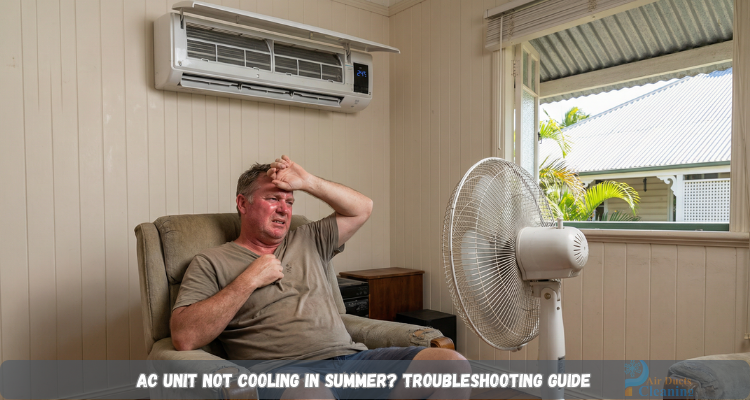
When your AC unit is not cooling during a Brisbane heatwave or a humid Sydney afternoon, it’s more than uncomfortable — it can make your home unbearable. In both cities, summer temperatures regularly push into the 30s, and high humidity adds extra strain on air conditioning systems. If your air conditioner is running but not cooling properly, there’s usually a clear reason behind it.
This detailed troubleshooting guide explains the common causes, practical DIY fixes, when to call a professional, and how to prevent the issue from happening again. Whether you use a split system, ducted air conditioning, or central air, this guide is tailored for homeowners in Brisbane and Sydney.
Why Your AC Unit Is Not Cooling Properly
When an air conditioner runs but doesn’t cool, it usually falls into one of these categories:
- Airflow problem
- Refrigerant issue
- Electrical fault
- Thermostat misconfiguration
- Dirty components
- Incorrect system sizing
- Extreme outdoor temperatures
In Brisbane’s subtropical humidity and Sydney’s summer heatwaves, systems often work harder than designed — which exposes hidden issues.
Common Reasons Your AC Is Not Cooling
1. Dirty or Blocked Air Filters
One of the most common reasons an AC unit not cooling but running is a clogged air filter.
Why it happens
Dust, pet hair, and pollen block airflow. Restricted airflow prevents proper heat exchange.
Signs
- Weak airflow from vents
- AC running constantly
- Higher electricity bills
- Musty smell
Solution
- Check filters every 1–2 months in summer
- Wash reusable filters
- Replace disposable filters
In Brisbane especially, high pollen and dust can clog filters quickly.
2. Low Refrigerant or Refrigerant Leak
Refrigerant absorbs heat from indoor air. If levels are low, your AC cannot cool effectively.
Symptoms
- AC blowing warm air
- Ice on indoor or outdoor unit
- Hissing sound near pipes
- Longer cooling cycles
Refrigerant does not get “used up.” If it’s low, there is a leak.
Solution
- Only licensed technicians can:
- Locate the leak
- Repair the pipe
- Recharge refrigerant safely
In Australia, refrigerant handling must comply with environmental regulations.
3. Dirty Outdoor Condenser Unit
In both Brisbane and Sydney, outdoor units collect:
- Dust
- Leaves
- Grass clippings
- Coastal salt air (especially in Sydney suburbs near the coast)
If airflow around the condenser is blocked, heat cannot escape.
Fix
- Turn off power
- Remove debris around unit
- Gently hose down coils
- Keep at least 60 cm clearance
Professional cleaning once a year is recommended.
4. Thermostat Problems
Sometimes the issue is not the AC itself.
Common mistakes
- Set to “fan” instead of “cool”
- Temperature set too high
- Dead thermostat batteries
- Poor placement near sunlight
Fix
- Set mode to “cool”
- Lower temperature below room temp
- Replace batteries
- Consider upgrading to a smart thermostat
Incorrect thermostat settings are a very common reason for an AC unit not cooling properly.
5. Frozen Evaporator Coil
If airflow is restricted or refrigerant is low, coils can freeze.
Signs
- Ice on indoor unit
- Water leakage
- Weak airflow
What to do
- Turn off cooling
- Switch fan on to melt ice
- Replace filter
- Call technician if freezing continues
Running the system while frozen can damage the compressor.
6. Electrical or Capacitor Failure
If your AC unit not cooling but outdoor fan running, the capacitor or compressor may be faulty.
Warning signs
- Clicking sounds
- AC takes time to start
- Outdoor unit humming
This requires professional repair. Electrical components should never be DIY.
7. Blocked or Leaking Ductwork (Ducted Systems)
In many Sydney and Brisbane homes, ducted systems lose cooling through:
- Leaking ducts
- Disconnected joints
- Crushed duct insulation
- Roof cavity heat gain
If your system runs but rooms stay warm, duct leakage is likely. Professional duct inspection can restore up to 20–30% efficiency.
8. AC Unit Too Small for Your Home
During extreme Brisbane or Sydney heatwaves, undersized units struggle.
Signs include:
- AC running all day
- Home never reaching set temperature
- Constant compressor operation
Correct sizing depends on:
- Home insulation
- Ceiling height
- Window exposure
- Climate zone
If your system was installed years ago, it may not match current needs.
9. Extreme Outdoor Heat
When outside temperature exceeds 38–40°C, some systems lose efficiency. Air conditioners are designed to work within specific outdoor temperature ranges. If heat exceeds that range, cooling output drops.
In Brisbane summers, this is common.
Step-by-Step Troubleshooting Checklist
Before calling a technician, try this checklist:
- Check thermostat settings
- Replace or clean air filter
- Inspect circuit breaker
- Clear debris around outdoor unit
- Check for ice buildup
- Ensure vents are open
- Close doors and windows
- Seal air leaks
If the issue continues, professional inspection is needed.
When to Repair vs Replace Your AC in Brisbane and Sydney
This is more important than cost alone.
Repair May Be Best If:
- Unit is under 8 years old
- Minor refrigerant issue
- Capacitor replacement
- Dirty coils only
Consider Replacement If:
- System is over 12–15 years old
- Frequent breakdowns
- High electricity bills
- Uses outdated refrigerant
- Major compressor failure
Newer energy-efficient systems can reduce cooling costs significantly during long Brisbane and Sydney summers.
When to Call a Licensed AC Technician
Call a professional if you notice:
- Warm air from vents
- Ice buildup
- Electrical burning smell
- Loud grinding noises
- Refrigerant leak signs
- No improvement after basic checks
In Australia, refrigerant handling must be done by licensed technicians.
Preventing AC Cooling Problems in Brisbane and Sydney
Prevention saves money and stress.
1. Annual Professional Servicing
Schedule servicing before summer starts — ideally in spring.
Technicians will:
- Check refrigerant levels
- Clean coils
- Test electrical components
- Inspect ducts
- Calibrate thermostat
2. Clean Filters Regularly
During peak summer, check monthly.
3. Keep Outdoor Unit Clear
Trim plants and remove debris.
4. Improve Home Insulation
Ceiling insulation reduces heat load significantly.
5. Seal Air Leaks
Gaps around windows and doors increase cooling demand.
6. Use Ceiling Fans
Fans improve air circulation and reduce AC load.
7. Close Curtains During Peak Heat
Especially west-facing windows in Sydney homes.
AC Unit Not Cooling in Brisbane? Climate-Specific Considerations
Brisbane has:
- High humidity
- Long cooling seasons
- Heavy summer rainfall
Humidity increases cooling demand and strain on systems. Dehumidification performance matters just as much as temperature control.
AC Unit Not Cooling in Sydney? What’s Different?
Sydney experiences:
- Coastal salt corrosion
- Heatwaves
- Variable microclimates
Salt air can corrode condenser coils in coastal suburbs, reducing performance. Regular servicing is especially important near the coast.
Frequently Asked Questions About AC Cooling Problems
1. Why is my AC running but not cooling?
Usually airflow restriction, refrigerant leak, or dirty coils.
2. Why is my AC blowing warm air?
Thermostat issue, refrigerant leak, or compressor problem.
3. Can I fix AC cooling problems myself?
You can clean filters and clear debris. Refrigerant and electrical repairs require licensed professionals.
4. How often should I service my AC?
At least once per year — preferably before summer.
Final Words
If your AC unit not cooling during a Brisbane or Sydney summer, don’t ignore it. Small issues like dirty filters can quickly turn into expensive repairs if left untreated.
Start with basic checks. If the problem continues, contact a licensed technician for a proper diagnosis. With regular maintenance, proper airflow, and seasonal servicing, your air conditioning system can handle Australia’s toughest summers without stress.