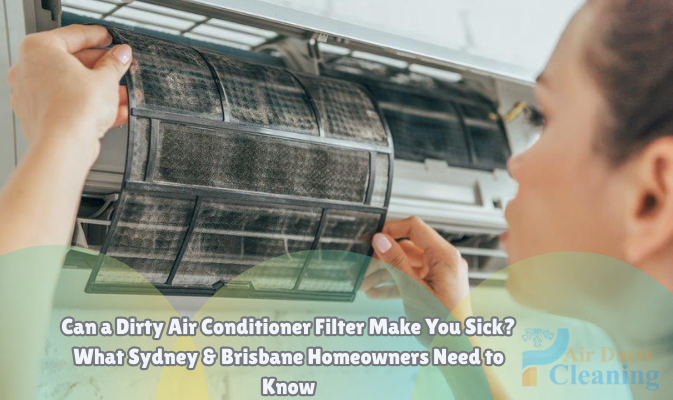
When you think about your air conditioner, your health probably isn’t the first thing that comes to mind. Most people focus on cooling performance, energy bills, and seasonal maintenance.
But what if a simple part of your system — the air conditioner filter — could impact your health, possibly making you feel sick without you even realizing it?
In cities like Sydney and Brisbane, where air conditioners run for many months of the year due to humidity and heat, a dirty air conditioner filter isn’t just an inconvenience — it can affect your indoor air quality, aggravate allergies, trigger respiratory symptoms, and in some cases contribute to real health problems.
So, can a dirty air conditioner filter make you sick? Yes — and in this guide, we’ll explain:
- what happens when your AC filter gets clogged
- the health risks involved
- common symptoms to watch for
- why this matters more in Sydney & Brisbane
- how to prevent problems with proper maintenance and cleaning
Let’s dive in.
What Is a Dirty Air Conditioner Filter and Why It Happens
Your air conditioner filter is designed to trap:
- dust
- pollen
- pet hair and dander
- mould spores
- debris
Over time — especially in Australian climates like Sydney’s urban environment or Brisbane’s humid weather — these contaminants build up in the filter. When the filter becomes clogged, airflow is restricted and the system becomes less efficient.
This doesn’t just affect cooling performance — it affects what you’re breathing, day in and day out.
How Dirty Filters Affect Indoor Air Quality
The connection between a dirty air conditioner filter and poor indoor air quality is one of the most important health links many homeowners overlook.
When dust, allergens and mould spores accumulate in the filter:
- The air conditioner can no longer trap them properly
- Pollutants recirculate in your home
- Indoor air becomes stale, dusty, and potentially harmful
Studies show indoor air pollution can often be worse than outdoor air pollution — especially in sealed homes relying on air conditioning year round. Poor indoor air quality has been linked to:
- allergies & asthma flare-ups
- irritated eyes, nose and throat
- sinus congestion
- respiratory infections
- skin irritation
This is particularly relevant to Sydney homes with older duct systems and Brisbane households dealing with humidity and mould growth inside HVAC systems.
Common Health Problems Linked to Dirty AC Filters
So, can a dirty air conditioner filter make you sick? Here are the symptoms many Australians report:
1. Respiratory & Allergy Symptoms
- persistent coughing
- sneezing and congestion
- shortness of breath
- asthma flare-ups
2. Sinus & Airway Irritation
When mould spores or dust circulate, they can irritate your sinuses, leading to chronic congestion or recurrent sinus infections.
3. Unexplained Odour & Musty Smells
If your home smells stale, musty or “off” when the AC runs, it’s often a sign of:
- mould in the filter
- bacteria growth
- trapped moisture inside ducts
These can contribute to a runny nose or headaches.
4. Headaches, Fatigue & General Malaise
Poor air quality can lead to headaches or a feeling of being “off” without an obvious cause — especially in airtight modern homes that rely heavily on air conditioning.
5. Skin & Eye Irritation
Did you know airborne particles can settle on skin and eyes? Dirty air conditioner filters can contribute to dryness, redness, itching, or flakiness — especially if you spend long hours indoors.
Why This Matters in Sydney & Brisbane Homes
Not all cities are the same when it comes to AC filter problems.
Sydney
Sydney’s urban traffic, coastal winds, and summer heat mean:
- dust and smog particles enter homes regularly
- air conditioners work longer
- pollutants build up faster in filters
Older homes with ducted systems often harbour sediment and allergens if filters aren’t cleaned regularly.
Brisbane
Brisbane’s subtropical climate brings:
- high humidity
- mould-friendly conditions
- sticky pollen particles
Moisture in AC systems increases the likelihood of mould in air conditioner filter, which can release spores back into the air — aggravating allergies and respiratory symptoms.
Dirty Air Conditioner Filers and Mould — A Big Health Risk
One of the scariest things you might find in a dirty filter is mould.
In humid cities like Brisbane (and even coastal Sydney), mould can grow inside the filter and ductwork, leading to potential health problems:
- persistent coughing
- worsening asthma
- sinus infections
- skin irritation
- headaches
Can a Dirty AC Filter Make You Sick — Real Health Risks
Yes — especially when combined with poor indoor air quality and mould exposure.
Who’s Most at Risk?
- children
- elderly people
- people with asthma or allergies
- those with compromised immune systems
These groups are more sensitive to airborne particles and pollutants that circulate through dirty AC filters.
How Often Should You Clean or Replace Your Air Conditioner Filter?
One of the biggest questions people ask is: “how often should AC filters be cleaned or replaced?”
Here’s a practical guide for Sydney & Brisbane homes:
1. Split System Filters
- Clean every 1–2 months
- Replace yearly (or as recommended by the manufacturer)
2. Ducted Systems
- Check filters every 2–3 months
- Professional cleaning of ducts every 2–3 years
- Filter replacement yearly or with heavy use
Homes with pets, smokers, or allergy sufferers might need more frequent cleaning.
Signs Your Air Conditioner Filter Is Dirty
You don’t need to wait until you feel sick — here are clear signs content creators and Melbourne, Sydney and Brisbane residents often search:
- Dust blowing from vents
- Musty odours when AC runs
- Reduced airflow
- AC working harder than usual
- Increased dust on furniture
- Allergies flaring indoors
Effective Ways to Boost Indoor Air Quality and Protect Your Health
Taking action doesn’t have to be difficult or expensive. Here’s what you can do:
1. Clean or Replace Filters Regularly
This is the largest and easiest step most homeowners skip.
2. Schedule Professional Duct Cleaning
Especially for ducted systems — dusty ducts contribute to indoor air pollution.
3. Use High-Quality Filters
Consider HEPA-rated filters for improved allergen capture.
4. Keep Vents Clean
Dust and pet hair that settle on grills eventually get pulled back into the system.
5. Monitor Indoor Air Quality
Air purifiers or humidity monitors can help you manage indoor air proactively.
Professional AC and Air Duct Cleaning in Sydney & Brisbane
When is it time to call a professional?
- Persistent odours
- Visible mould growth
- Allergies worsening indoors
- Symptoms improve when away from home
- AC performance drops
Professional services can:
- Remove deep-seated dust & debris
- Eliminate mould spores
- Improve airflow efficiency
- Reduce allergen circulation
- Improve overall indoor air quality
Frequently Asked Questions About Dirty Air Conditioner Filter
1. Can a dirty air conditioner filter make you sick?
Yes — poor indoor air quality from a dirty AC filter can contribute to respiratory symptoms, allergies, headaches, fatigue, and irritation.
2. What are common symptoms of a clogged AC filter?
Coughing, sneezing, reduced airflow, musty odours, headaches, worsened asthma and sinus pressure.
3. How often should I clean my AC filter in Sydney/Brisbane?
Check monthly, clean or replace every 1–3 months; ducted systems should be professionally cleaned every 2–3 years.
4. Does mould in an AC filter make you sick?
Yes — mould spores can circulate and trigger allergies, respiratory issues, and even skin irritation.
Final Thoughts
Cleaner Filters, Healthier Homes
Yes — a dirty air conditioner filter can make you sick. It’s not just poor performance or higher energy bills — it’s about what you and your family are breathing every day.
For Sydney and Brisbane homeowners, staying on top of air conditioner maintenance isn’t just about comfort — it’s about health.