If you live in Brisbane or Sydney, you’ve probably noticed how quickly dust, humidity, and everyday living can affect your home environment. From coastal moisture to urban pollution, indoor air quality can decline without you even realising it.
That’s why many homeowners are now asking: does deep cleaning improve indoor air quality, or is it just another cleaning trend?
The short answer is yes—when done properly, deep cleaning can significantly reduce indoor pollutants, improve airflow, and create a healthier living space. In this guide, we’ll break down exactly how it works, what areas matter most, and why professional deep cleaning services can make a real difference in Brisbane and Sydney homes.
What Is Indoor Air Quality and Why Does It Matter?
Indoor air quality (IAQ) refers to the condition of the air inside your home, including the level of pollutants, allergens, and airflow efficiency.
Why Indoor Air Quality Is Important
Poor indoor air quality can lead to:
- Respiratory irritation
- Allergies and asthma symptoms
- Fatigue and headaches
- Long-term health concerns
In cities like Brisbane and Sydney, common contributors include:
- Dust and fine particles
- Pet dander
- Mould (mold) from humidity
- Outdoor pollution entering the home
Common Sources of Indoor Air Pollution
Even clean-looking homes can contain hidden pollutants:
- Carpets trapping dust and allergens
- Upholstery holding bacteria and debris
- Air ducts circulating contaminated air
- Moisture causing mould growth
This is where deep cleaning for air quality becomes essential.
What Are Deep Cleaning Services?
Deep cleaning goes beyond regular surface cleaning. It targets hidden dirt, bacteria, and allergens that build up over time.
Deep Cleaning vs Regular Cleaning
Regular Cleaning
- Surface-level dusting
- Vacuuming visible areas
- General tidying
Deep Cleaning
- Thorough carpet and upholstery cleaning
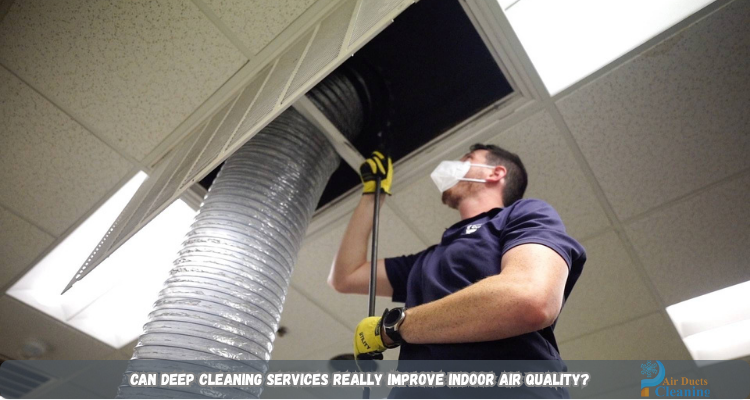
- Air duct and vent cleaning
- Removal of mould and mildew
- Sanitisation of high-touch areas
Deep cleaning focuses on removing airborne contaminants and improving indoor air quality.
Does Deep Cleaning Improve Indoor Air Quality?
Yes—deep cleaning directly improves indoor air quality by removing the main sources of pollution inside your home.
1. Removes Dust and Allergens
Dust, pollen, and pet dander accumulate over time.
Deep cleaning:
- Eliminates fine particles
- Reduces allergens in the air
- Improves breathing conditions
2. Eliminates Mould and Mildew
Humidity in Brisbane and coastal Sydney homes can lead to mould growth.
Deep cleaning helps:
- Remove mould spores
- Prevent regrowth
- Improve overall air safety
3. Reduces Airborne Contaminants
Bacteria and pollutants settle in soft surfaces and ducts.
Professional cleaning:
- Removes trapped contaminants
- Prevents recirculation through airflow
4. Improves Air Circulation
Blocked vents and dusty systems restrict airflow.
Cleaning:
- Clears ventilation pathways
- Improves airflow efficiency
Result: Cleaner, fresher air throughout your home.
Key Areas That Affect Indoor Air Quality
Not all areas contribute equally—some parts of your home have a bigger impact on air quality.
1. Carpets and Rugs
Carpets act like filters, trapping:
- Dust
- Pet hair
- Allergens
Over time, these particles get released into the air.
Deep cleaning removes:
- Embedded dirt
- Bacteria
- Dust mites
2. Upholstery and Furniture
Sofas and chairs collect:
- Dust
- Sweat
- Microorganisms
Professional cleaning helps eliminate these hidden pollutants.
3. Air Ducts and Vents
Your HVAC system circulates air throughout your home.
If ducts are dirty:
- Contaminants spread to every room
- Airflow becomes restricted
Air duct cleaning:
- Removes buildup
- Improves ventilation
4. Bathrooms and Damp Areas
Moisture-prone areas are breeding grounds for mould.
Deep cleaning:
- Removes mildew
- Prevents future growth
Benefits of Deep Cleaning for Indoor Air Quality
1. Healthier Living Environment
Removing pollutants reduces health risks and improves overall wellbeing.
2. Allergy and Asthma Relief
Cleaner air helps minimise symptoms caused by dust and allergens.
3. Reduced Indoor Pollution
Deep cleaning eliminates major sources of indoor air contamination.
4. Better Airflow and Ventilation
Clean systems allow air to circulate freely and efficiently.
5. Improved Comfort
Fresh, clean air makes your home feel more comfortable and inviting.
Deep Cleaning vs Regular Cleaning Key Differences
| Feature | Regular Cleaning | Deep Cleaning |
| Surface Cleaning | Yes | Yes |
| Removes Hidden Dust | No | Yes |
| Air Quality Improvement | Limited | Significant |
| Mould Removal | No | Yes |
| HVAC Cleaning | No | Yes |
Deep cleaning is far more effective for improving indoor air quality.
How Often Should You Deep Clean Your Home?
The frequency depends on your environment and lifestyle.
Recommended Schedule
- Every 3–6 months for most homes
- More often if you have pets
- More frequently in humid areas like Brisbane
Sydney homes may also need regular cleaning due to:
- Urban dust
- Pollution
- Coastal moisture
When Should You Hire Professional Cleaning Services?
While basic cleaning can be done yourself, professional services are recommended when:
- Air quality feels poor
- Allergies are increasing
- Dust builds up quickly
- Mould is visible
- Airflow seems weak
Why Professionals Make a Difference
Professional deep cleaning services:
- Use advanced equipment
- Reach hidden areas
- Provide thorough sanitisation
This ensures maximum improvement in indoor air quality.
Real-Life Example for Brisbane & Sydney Homes
Many homeowners in Brisbane notice mould and humidity issues during warmer months. Similarly, Sydney residents often deal with dust and urban pollution.
In both cases:
- Deep cleaning reduces indoor pollutants
- Improves breathing comfort
- Enhances overall home hygiene
Tips to Maintain Better Indoor Air Quality
Regular Cleaning Habits
- Vacuum carpets weekly
- Wipe surfaces regularly
Change Air Filters
Replace filters every 1–3 months.
Control Humidity
Use ventilation or dehumidifiers when needed.
Schedule Professional Cleaning
Routine deep cleaning keeps your home in top condition.
Frequently Asked Question About Indoor Air Quality
1. Does deep cleaning really improve indoor air quality?
Yes, it removes dust, allergens, and pollutants that affect air quality.
2. Can cleaning reduce dust in the air?
Deep cleaning significantly reduces airborne dust and particles.
3. Is deep cleaning good for allergies?
Yes, it helps remove allergens that trigger symptoms.
4. How often should I deep clean my home?
Every 3–6 months, depending on your environment.
5. Do professional cleaning services help with air quality?
Yes, they provide more thorough and effective cleaning than regular methods.
Conclusion
So, does deep cleaning improve indoor air quality?
Absolutely.
By removing dust, allergens, mould, and hidden contaminants, deep cleaning creates a healthier and more comfortable living environment. For homeowners in Brisbane and Sydney, where humidity and dust are common challenges, it’s one of the most effective ways to maintain clean indoor air.
Investing in regular deep cleaning services not only improves air quality but also supports your health, comfort, and overall home hygiene.