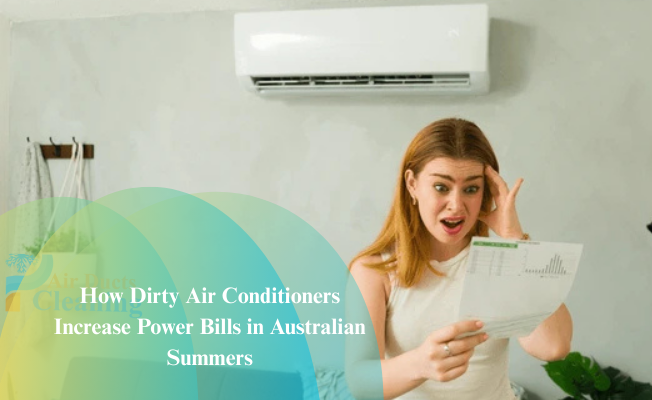
Australian summers are known for extreme heat, and for most households, air conditioners are the biggest contributor to electricity bills during this period. While rising energy prices often take the blame, many homeowners overlook a major cause of high summer power bills — dirty air conditioners.
A poorly maintained air conditioner can use 20–40% more electricity than a clean system. In cities like Sydney and Brisbane, where air conditioners run for long hours during summer, dirt, dust, and mould buildup significantly increase energy consumption without improving cooling.
This article explains how dirty air conditioners increase power bills, why Australian summers make the problem worse, and how professional cleaning can restore efficiency and reduce costs.
Why Air Conditioners Use More Power in Summer
During summer, air conditioners face their heaviest workload.
Common summer challenges include:
- High outdoor temperatures
- Extended operating hours
- High humidity (especially in Brisbane)
- Heatwaves pushing systems to capacity
- Increased indoor moisture
When an air conditioner is clean, it can handle this load efficiently. When it’s dirty, the system struggles, leading to longer run times and higher power usage.
How Dirt and Dust Increase Energy Consumption
Air conditioners rely on clean airflow and efficient heat exchange. Dirt disrupts both.
1. Dirty Air Filters Restrict Airflow
Clogged filters reduce the amount of air passing through the system. This forces the air conditioner to:
- Run longer cycles
- Use more electricity
- Struggle to reach set temperatures
Even slightly dirty filters can significantly reduce efficiency during peak summer use.
2. Dirty Evaporator Coils Reduce Heat Transfer
Evaporator coils absorb heat from indoor air. When coated with dust and grime:
- Heat transfer becomes inefficient
- Cooling output drops
- The system works harder to compensate
This leads to higher energy consumption with poorer cooling results.
3. Fan Barrel Buildup Weakens Airflow
In split systems, dust and mould commonly build up on the fan barrel. This reduces airflow and causes:
- Uneven cooling
- Longer run times
- Increased strain on the motor
The result is higher power usage throughout summer.
4. Moisture and Mould Increase Resistance
Australian summers bring humidity, especially in Brisbane and coastal Sydney.
Dirty systems trap moisture, encouraging mould growth, which:
- Restricts airflow
- Increases system resistance
- Forces components to work harde
This directly impacts electricity usage.
Why Dirty Air Conditioners Cost More During Australian Summers
A dirty air conditioner doesn’t just use more power — it uses power inefficiently.
Summer-specific cost factors:
- Systems run for longer hours
- Peak electricity rates apply
- Cooling demand is highest
- Heatwaves prevent systems from cycling off
In this environment, even minor inefficiencies can add hundreds of dollars to annual electricity bills.
Brisbane Summers Are a Perfect Storm for High Power Bills
Brisbane’s climate creates ideal conditions for both heavy air con use and contamination.
Brisbane-specific challenges:
- High humidity
- Year-round air con usage
- Faster mould growth
- Moisture buildup inside units
Dirty systems in Brisbane often suffer from reduced cooling and increased power consumption simultaneously.
Recommended Brisbane cleaning frequency:
- Every 6–12 months for homes
- Every 3–6 months for high-use or rental properties
Sydney Summers Bring Coastal Air & Rising Electricity Costs
Sydney homes face different but equally impactful challenges.
Sydney-specific issues:
- Salt air in coastal suburbs
- Urban dust and pollution
- Apartment living with limited ventilation
- High summer electricity tariffs
Salt and dust cling to internal components, reducing efficiency and increasing electricity usage over time.
The Hidden Cost of Longer Run Times
Dirty air conditioners take longer to cool rooms.
What this means:
- More hours running each day
- Increased compressor workload
- Higher wear and tear
- Larger electricity bills
Many Australian households blame rising energy prices without realising their air conditioner is running far longer than necessary.
How Professional Air Con Cleaning Reduces Power Bills
Professional air con cleaning removes efficiency-killing buildup.
Key energy-saving benefits:
- Restored airflow
- Improved heat exchange
- Faster cooling cycles
- Reduced compressor strain
- Lower overall electricity usage
In many cases, cleaning restores near-original efficiency.
DIY Cleaning vs Professional Cleaning and Its Energy Impact
DIY cleaning can:
- Clean filters
- Remove surface dust
DIY cleaning cannot:
- Clean evaporator coils properly
- Remove fan barrel mould
- Flush drain lines safely
- Restore full system efficiency
Professional cleaning targets the components that most affect energy consumption.
How Often Should You Clean Your Air Conditioner to Save Money?
Recommended frequency in Australia:
- Every 12 months (Sydney & temperate areas)
- Every 6–9 months (Brisbane & humid regions)
- Every 3–6 months for rentals or heavy use
Regular cleaning prevents power bills from creeping up over time.
Signs Your Air Conditioner Is Costing You More to Run
If you notice any of the following, your air conditioner may be wasting electricity:
- Rising power bills
- Weak or uneven airflow
- Longer cooling times
- Musty smells
- Unit runs constantly during heat
These are strong indicators that professional cleaning is overdue.
Air Conditioner Cleaning Costs to Long-Term Savings
Many homeowners hesitate due to cleaning costs — but the savings often outweigh the expense.
Benefits include:
- Reduced summer power bills
- Fewer repairs
- Longer system lifespan
- Better indoor air quality
In most cases, professional cleaning pays for itself within one or two summer seasons.
FAQs About Dirty Air Conditioners & Power Bills
Can a dirty air conditioner really increase power bills?
Yes. Dirty systems can use 20–40% more electricity.
Does cleaning make a noticeable difference?
Most homeowners notice improved cooling and lower energy use immediately.
Is cleaning cheaper than replacing the unit?
Absolutely. Cleaning restores efficiency at a fraction of replacement cost.
How long does professional cleaning take?
Usually 1–2 hours per unit, depending on condition.
Conclusion
Clean Air Conditioners Cost Less to Run
In Australian summers, air conditioners work harder than any other appliance. When they’re dirty, they waste electricity, cool poorly, and cost far more to operate.
Professional air con cleaning is one of the simplest and most effective ways to reduce summer power bills, especially in Sydney and Brisbane.