Brisbane’s warm, humid climate is ideal for many things — unfortunately, mould growth inside split system air conditioners is one of them. If your split system smells musty, triggers allergies, or isn’t cooling properly, mould contamination is often the hidden cause.
Many Brisbane homeowners don’t realise that standard filter cleaning is not enough to remove mould from a split system. Over time, mould builds up deep inside the indoor unit, affecting air quality, energy efficiency, and even your family’s health.
In this guide, we’ll explain why split system mould is so common in Brisbane, the warning signs to look for, health risks, and why professional mould cleaning is the safest and most effective solution.
Why Split System Mould Is So Common in Brisbane
Brisbane’s subtropical climate creates perfect conditions for mould growth inside air conditioners.
Key factors include:
- High humidity year-round
- Warm temperatures, even in winter
- Frequent air conditioner use
- Moisture buildup inside indoor units
- Poor airflow or infrequent cleaning
When warm air passes over cold evaporator coils, condensation forms inside the unit. In Brisbane, this moisture doesn’t dry out easily — creating an ideal breeding ground for mould, mildew, and bacteria.
Sydney also experiences mould issues, but Brisbane homes are far more vulnerable due to higher humidity levels.
Where Mould Grows Inside a Split System Air Conditioner
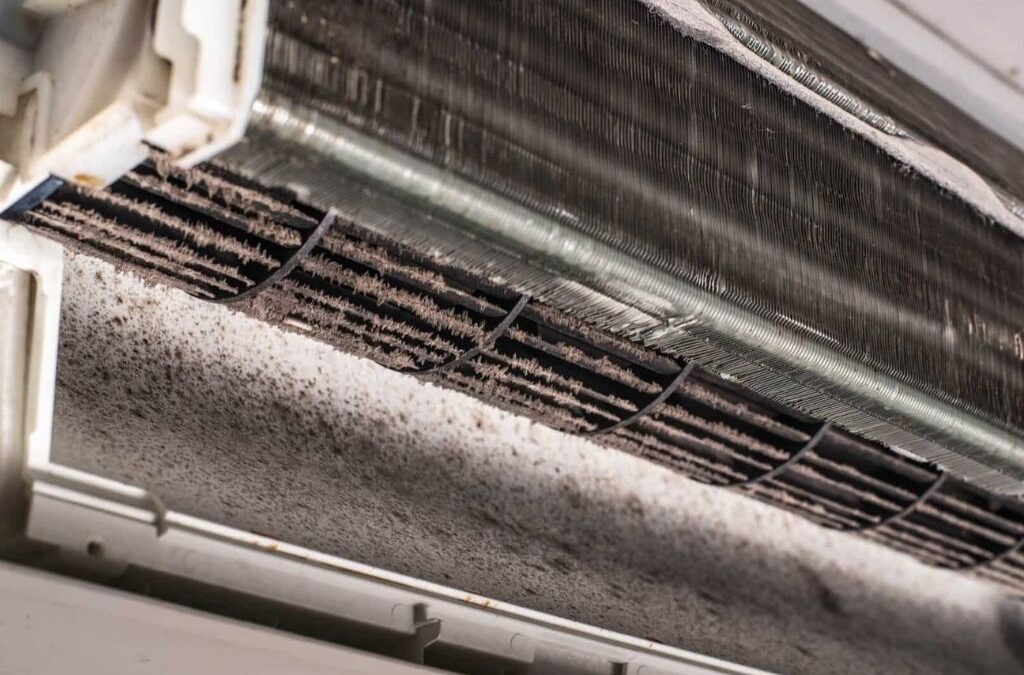
Mould doesn’t just grow on visible filters. It commonly spreads through hidden internal components, including:
- Evaporator coils
- Fan barrel (cross-flow fan)
- Drain pan and drainage lines
- Blower housing
- Internal plastic casing
This is why many homeowners say:
“I cleaned the filters, but the smell is still there.”
Unfortunately, by the time mould is noticeable, it has usually spread deep inside the unit, beyond DIY reach.
Warning Signs Your Split System Has Mould
If you live in Brisbane and notice any of the following, mould contamination is likely present:
1. Musty or Damp Smell
A strong mouldy smell when the AC turns on is the most common sign.
2. Allergy or Asthma Symptoms
Sneezing, coughing, itchy eyes, or headaches that worsen when the air con runs.
3. Reduced Cooling Performance
Mould restricts airflow and insulates coils, reducing cooling efficiency.
4. Visible Black or Green Spots
Often seen on vents, louvers, or behind filters.
5. Excessive Condensation or Leaks
Blocked drains caused by mould can cause water leaks indoors.
Health Risks of Mouldy Split Systems
Breathing air from a mould-contaminated split system can pose serious health risks, especially for vulnerable groups.
Common health issues include:
- Asthma flare-ups
- Respiratory infections
- Chronic coughing or wheezing
- Sinus congestion
- Skin and eye irritation
- Fatigue and headaches
Children, elderly residents, and people with allergies are particularly affected. In Brisbane homes where air conditioners run almost year-round, ongoing exposure can significantly reduce indoor air quality.
Why DIY Cleaning Doesn’t Remove Split System Mould
Many homeowners attempt DIY cleaning using sprays or filter washing. While this helps superficially, it does not eliminate mould.
Limitations of DIY cleaning:
- Filters only represent a small part of the system
- Mould grows deep inside the fan barrel
- Household sprays don’t kill mould spores effectively
- Risk of spreading spores into the air
- Electrical and water damage risks
In Brisbane’s humidity, incomplete cleaning often results in mould returning within weeks.
What Professional Split System Mould Cleaning Involves
Professional split system mould cleaning is far more thorough and safe.
A professional service typically includes:
- Full disassembly of the indoor unit
- Deep cleaning of evaporator coils
- Fan barrel removal and sanitisation
- Drain tray and drainage line flushing
- Anti-microbial treatment
- High-pressure or chemical-safe wash
- Mould spore neutralisation
- Reassembly and performance testing
This process removes mould at the source, not just the symptoms.
Why Brisbane Homes Need More Frequent Split System Cleaning
Compared to cooler or drier regions, Brisbane split systems require more frequent professional cleaning.
Recommended frequency in Brisbane:
1. Every 6–12 months for residential homes
2. Every 3–6 months for:
- Homes with children
- Allergy sufferers
- Rental properties
- Coastal or high-humidity areas
In Sydney, annual cleaning may be sufficient for many homes, but Brisbane’s climate makes preventative maintenance essential.
Energy Efficiency and Cost Benefits
A mould-free split system doesn’t just improve health — it also saves money.
Benefits include:
- Up to 20–30% improved airflow
- Lower power consumption
- Faster cooling times
- Reduced strain on components
- Longer system lifespan
Dirty systems work harder to cool rooms, increasing electricity bills — a major issue during Brisbane summers.
Split System Mould Cleaning for Rental Properties
Mouldy air conditioners are a common dispute in Brisbane rentals.
Landlord responsibilities often include:
- Ensuring the system is hygienic
- Providing safe indoor air quality
- Preventing mould-related damage
Professional split system cleaning:
- Helps meet rental compliance
- Prevents tenant complaints
- Reduces costly breakdowns
- Protects property value
Tenants may also be required to arrange cleaning during end-of-lease agreements.
When Is the Best Time to Book Split System Mould Cleaning?
In Brisbane, mould can develop at any time — but some periods are worse than others.
Best times to book:
- Spring (September–October) – before summer humidity
- After heavy summer use
- When first noticing odours or symptoms
- Before renting or selling a property
Waiting too long allows mould colonies to grow and spread deeper into the unit.
How to Prevent Mould Returning After Cleaning
After professional cleaning, you can reduce the chance of mould returning by:
- Running the fan mode for 10–15 minutes after cooling
- Keeping windows closed during humid days
- Cleaning filters monthly
- Booking regular professional servicing
- Ensuring drainage lines stay clear
In Brisbane’s climate, prevention is ongoing — not a one-time fix.
Split System Mould Cleaning in Brisbane vs Sydney
While Sydney homes also experience mould, Brisbane faces higher risk due to humidity.
| Factor | Brisbane | Sydney |
| Humidity | Very High | Moderate |
| Cleaning Frequency | 6–12 months | 12–18 months |
| Mould Risk | High | Medium |
| Cooling Season | Longer | Shorter |
This makes Brisbane one of the highest-demand markets for professional split system mould cleaning in Australia.
FAQs: Split System Mould Cleaning in Brisbane
How much does split system mould cleaning cost in Brisbane?
Prices vary depending on unit size and contamination level, but professional cleaning typically costs far less than replacing a system damaged by mould.
Is mould inside air conditioners dangerous?
Yes. Long-term exposure can cause respiratory issues, allergies, and worsen asthma symptoms.
Can mould come back after cleaning?
If not professionally removed or if humidity control is poor, mould can return. Regular maintenance is key.
Does cleaning damage the air conditioner?
No — professional cleaning improves performance and extends system life.
How long does professional cleaning take?
Usually 1–2 hours per unit, depending on condition.
Conclusion
Don’t Ignore Split System Mould in Brisbane
Split system mould is not just a smell issue — it’s a health, efficiency, and safety concern. Brisbane’s humid climate makes mould growth almost unavoidable without professional intervention.
If your air conditioner smells, triggers allergies, or struggles to cool, professional split system mould cleaning is one of the smartest investments you can make for your home.