If you live in Brisbane or Sydney, you know how important a reliable split system air conditioner is. Between Brisbane’s long, humid summers and Sydney’s cold winters, these units are a go-to solution for keeping your home comfortable all year round.
But many homeowners wonder:
Do split systems use a lot of electricity?
The truth is — not usually. Modern split systems are designed to be energy efficient. However, several hidden factors can quietly drive up electricity consumption, leading to higher bills without you noticing.
In this Topic, we’ll uncover what makes split systems use more electricity, provide practical solutions, and help Brisbane and Sydney households save money while staying comfortable.
How Much Electricity Does a Split System Air Conditioner Use?
Electricity usage depends on several factors: the size of the unit, efficiency, and how long it runs.
On average:
- Small bedroom units: 0.6–1 kWh per hour
- Medium living area units: 1–1.8 kWh per hour
- Large open-plan systems: 2–2.5 kWh per hour
Running your split system efficiently is the key to keeping bills manageable — and that’s where hidden factors play a role.
Why Split Systems Are Generally Energy Efficient
Modern inverter split systems are highly energy-efficient.
Inverter technology adjusts compressor speed gradually instead of constantly switching on and off. This provides:
- Stable room temperature
- Lower electricity consumption
- Faster heating and cooling
- Less wear and tear on the system
For Brisbane’s long hot seasons and Sydney’s chilly winters, inverter split systems are ideal for both comfort and cost-efficiency. Even so, hidden inefficiencies can increase electricity usage.
The Hidden Factors That Make Split Systems Use More Electricity
Let’s explore the main issues most homeowners overlook.
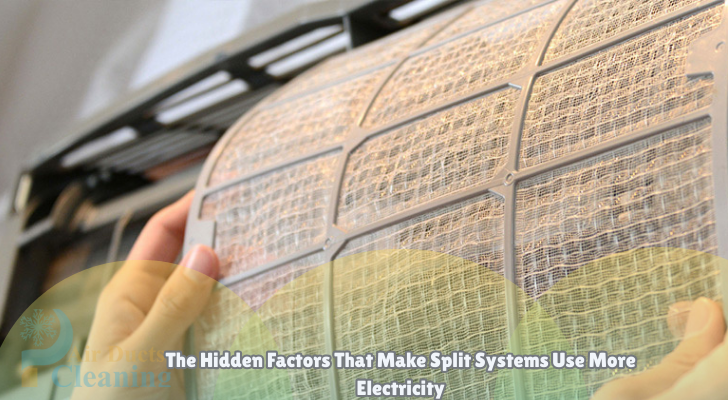
1. Dirty Filters and Blocked Airflow
Dust, pollen, and pet hair can clog filters, reducing airflow.
Consequences:
- Compressor works harder
- Longer running times
- Increased electricity use
Australian homes, especially in Brisbane and Sydney suburbs, can experience quick filter build-up due to dust and humidity.
Solution: Clean filters every 4–6 weeks during high-use seasons.
2. Poor Home Insulation
Older Sydney and Brisbane homes may lack proper insulation.
When cooled or heated air escapes:
- The system runs longer
- Rooms take longer to reach desired temperatures
- Energy usage rises
Typical problem areas include windows, doors, ceilings, and thin walls.
Solution: Seal gaps and improve insulation — this can reduce energy use by up to 40%.
3. Incorrect Unit Size
Installing a unit that is too small or too large creates inefficiencies.
- Undersized units: run constantly, never reach set temperature
- Oversized units: short cycle frequently, wasting electricity
Solution: Choose the right size for your room to maximise efficiency.
4. Extreme Thermostat Settings
Setting your AC too low in summer or too high in winter increases energy consumption.
Energy-efficient guide for Australians:
- Summer: ~24°C
- Winter: ~20°C
Each extra degree can increase energy use by 5–10%.
5. Open Doors, Windows, and Curtains
Air escapes through open doors and windows, or heat enters through unshaded glass.
Result: AC works overtime, consuming more electricity.
Solution: Close doors, use blinds or curtains, and seal gaps around windows.
6. Skipping Annual Maintenance
Neglecting maintenance reduces efficiency. Over time, dirt builds up on coils and outdoor units.
Consequences:
- Reduced airflow
- Ineffective cooling or heating
- Higher energy consumption
Solution: Schedule a professional service at least once a year.
7. Older Non-Inverter Units
Older units without inverter technology consume more power because they:
- Use fixed-speed compressors
- Constantly turn on and off
- Struggle to maintain temperature
Upgrading to an inverter model can reduce electricity use by 30–40%.
8. Poor Airflow Around Units
Furniture or obstructions near indoor or outdoor units restrict airflow, causing uneven cooling/heating and longer running times.
Solution: Keep units clear and ensure unobstructed airflow.
9. Using the System Without Support in Extreme Weather
Extreme heat or cold forces your split system to work harder. Using ceiling fans, shading windows, and sealing drafts can reduce electricity use.
Quick Energy-Saving Checklist for Australian Homes
- Clean filters monthly
- Seal windows and doors
- Use blinds or curtains
- Set efficient thermostat temperatures
- Service the system annually
- Upgrade old units to inverter models
- Keep units and vents unobstructed
Everything Australians Want to Know About Split System Electricity Usage
Q1: Do split systems use more electricity than ducted air conditioning?
Not usually. Split systems are often cheaper to run because they allow you to cool or heat only the rooms you use, unlike ducted systems that condition the whole home.
Q2: Are inverter split systems cheaper to run than regular split systems?
Yes. Inverter systems adjust compressor speed gradually, consuming less electricity and maintaining consistent room temperatures.
Q3: How often should I clean my split system filters in Brisbane and Sydney?
During high-use seasons, clean filters every 4–6 weeks. Homes in dusty or humid areas may need more frequent cleaning.
Q4: Can old split systems be upgraded for better efficiency?
Absolutely. Replacing non-inverter or outdated units with modern energy-efficient models can reduce electricity usage by 30–40%.
Q5: What’s the best thermostat setting to save power in summer and winter?
Around 24°C in summer and 20°C in winter provides comfort without unnecessarily high electricity bills.
Q6: Can poor insulation really affect electricity bills?
Yes. Air leaks, uninsulated walls, and poorly sealed windows make your AC work harder, increasing power consumption significantly.
Q7: Do split systems consume more power if rooms are cluttered?
Yes. Blocked airflow from furniture or curtains can force the system to run longer and use more electricity.
Final Words
When properly sized, maintained, and used wisely, split systems do not naturally consume a lot of electricity.
Hidden factors like dirty filters, poor insulation, wrong unit sizing, and extreme settings can silently increase energy use. Addressing these issues ensures:
- Lower electricity bills
- More comfortable indoor temperatures
- Longer system lifespan
- Reduced energy waste
Brisbane and Sydney homeowners can enjoy efficient, cost-effective heating and cooling by combining regular maintenance, smart usage, and energy-saving habits.